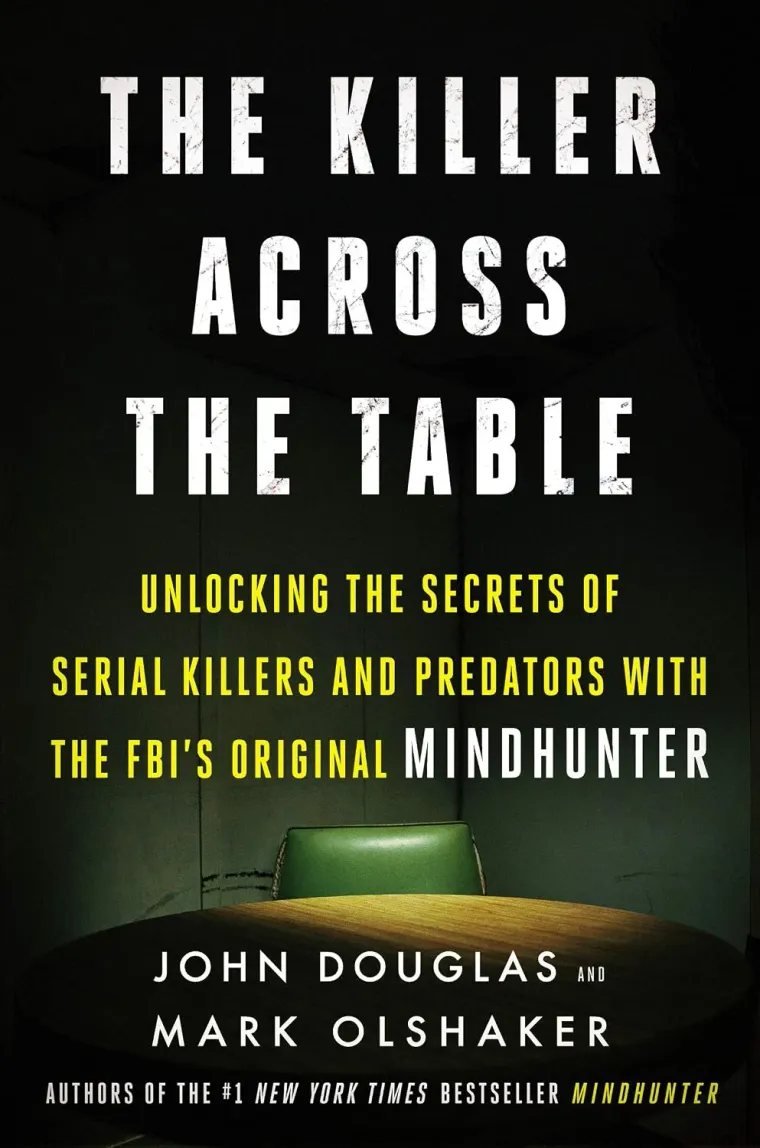
The Killer Across the Table
Before you read
Genre True Crime, Biography, Autobiography
Pace Medium
Mood Dark · Emotional · Tense · Sad · Reflective · Informative · Challenging
Content warnings (8) tap to show
- Violence
- Graphic gore
- Sexual assault
- Child abuse
- Death of a loved one
- Torture
- Kidnapping
- Drug or alcohol abuse
My Score
My Review
The Killer Across the Table has John Douglas looking closely at four very different killers he interviewed or studied: Joseph McGowan, Joseph Kondro, Donald Harvey, and Todd Kohlhepp. Instead of just retelling their crimes, Douglas spends most of his time trying to understand how each man thought, what drove him, how investigators approached him, and what the interviews taught Douglas about profiling violent offenders.
I found the psychology much more interesting than the crimes themselves. Some of the details are genuinely awful, especially the cases involving children and sexual violence, but Douglas keeps bringing everything back to behaviour, manipulation, control, and the choices these men made. I was hooked way earlier than I expected because it almost feels like sitting beside him during the interviews and watching him figure out which questions might actually get through to someone who feels almost no remorse. There are a few side stories that wander away from the main four cases, but overall this was one of the more interesting true-crime books I've read about how profiling actually works.
The Goods
- The criminal psychology is fascinating
- Douglas explains profiling in an easy-to-follow way
- The killer interviews are genuinely unsettling
- Each case shows a different type of offender
- Focuses on why offenders behave the way they do
The Bads
- Some crime descriptions are difficult to read
- The side cases can interrupt the main stories
- Certain sections repeat ideas from earlier Douglas books
- There is a lot of sexual violence involving children
- Some of Douglas's commentary can feel a little absolute
My Recommendation
This is a really good fit if you're interested in true crime but especially like the psychology behind it. Rather than simply telling you what four killers did, Douglas keeps asking what their behaviour reveals, why they chose particular victims, and how investigators can use those patterns to understand other offenders. There are some extremely disturbing cases here, including child murder and sexual violence, so it definitely isn't light reading, but if the profiling side of Mindhunter interests you as much as the crimes themselves, there's a lot to get out of this one.
Spoilers Tap to show: only if you’ve read it, or don’t mind knowing what happens
Douglas examines four major offenders. Joseph McGowan murders seven-year-old Joan D'Alessandro after she comes to his home selling Girl Scout cookies, and Douglas later evaluates him when parole becomes a possibility, concluding that he remains dangerous. Joseph Kondro admits murdering young girls who belonged to families he knew, explaining with almost no emotion how he exploited their trust and would likely have continued killing. Hospital orderly Donald Harvey confesses to killing dozens of patients through methods including suffocation and poisoning while insisting for years that he saw himself as ending suffering rather than committing murder. The final major case is Todd Kohlhepp, whose crimes are uncovered after police find Kala Brown chained inside a shipping container on his property; he confesses to killing her boyfriend, the four victims in the Superbike Motorsports murders, and another couple. Across the four cases, Douglas comes back to the same conclusion: backgrounds and circumstances may help explain violent offenders, but manipulation, domination, control, and ultimately personal choice are central to understanding what they do.
Find this book at these locations
To buy
- Amazon paperback or hardcover
- Bookshop.org from a local shop
To listen
- Audible free sample
E-books
- Kindle
- Google Play Books
- Libby free from your library
More reviews: Goodreads · The StoryGraph