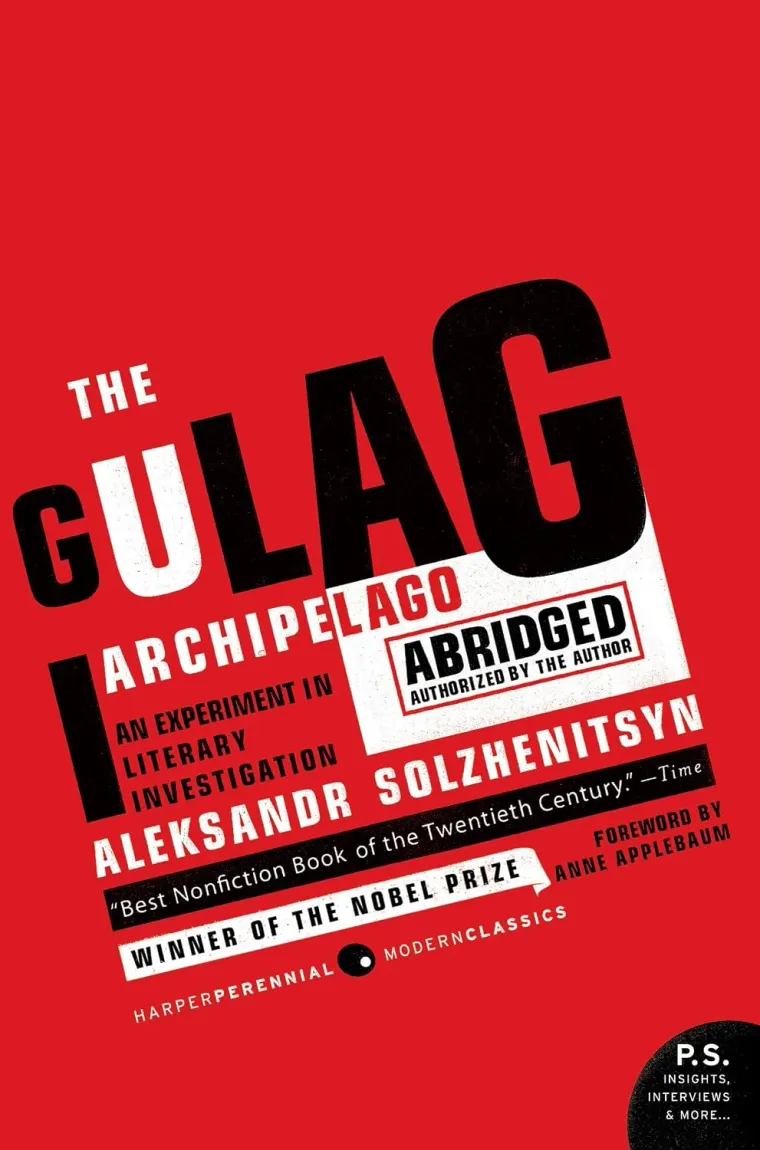
The Gulag Archipelago
Before you read
Genre Non-Fiction, History, Memoir
Pace Slow
Mood Dark · Emotional · Sad · Reflective · Informative · Challenging
Content warnings (8) tap to show
- Violence
- Graphic gore
- Sexual assault
- Child abuse
- Suicide
- Death of a loved one
- Torture
- War
My Score
My Review
Aleksandr Solzhenitsyn’s The Gulag Archipelago is a massive account of the Soviet prison and labor-camp system, built from his own time inside it and the testimony of many other prisoners. It covers arrest, interrogation, transport, forced labor, punishment, fear, and the machinery that let a huge system of repression go on for so long.
What makes this book so powerful is how personal the history feels. Solzhenitsyn doesn’t just describe policies and institutions. He shows what those systems did to individual people. It’s dense, long, and often emotionally exhausting, but the detail gives the book a lot of weight, and it feels like more than a straightforward history.
The Goods
- It’s an important firsthand historical account.
- The personal testimony makes the history feel close.
- It shows the human cost of repression.
- It’s very detailed and deeply researched.
- It leaves a lasting impression.
The Bads
- It’s very long.
- A lot of it’s extremely dense.
- Some sections feel repetitive.
- It can be emotionally exhausting.
- It’s definitely not an easy casual read.
My Recommendation
This is best if you’re genuinely interested in Soviet history, political repression, prison systems, and firsthand accounts of life under that kind of rule. It’s long, dense, and sometimes overwhelming, so it’s not a casual read. If you’re willing to take your time with it, the scale of the testimony and the detail make it a really heavy, important book.
Spoilers Tap to show: only if you’ve read it, or don’t mind knowing what happens
Solzhenitsyn reconstructs the Soviet system of arrest, interrogation, forced labor, imprisonment, and internal exile from his own experience and the testimony of other prisoners. There’s no fictional twist ending. Across its parts, the work follows the machinery of repression and the struggle to stay morally responsible inside it.
Find this book at these locations
To buy
- Amazon paperback or hardcover
- Bookshop.org from a local shop
To listen
- Audible free sample
E-books
- Kindle
- Google Play Books
- Libby free from your library
More reviews: Goodreads · The StoryGraph