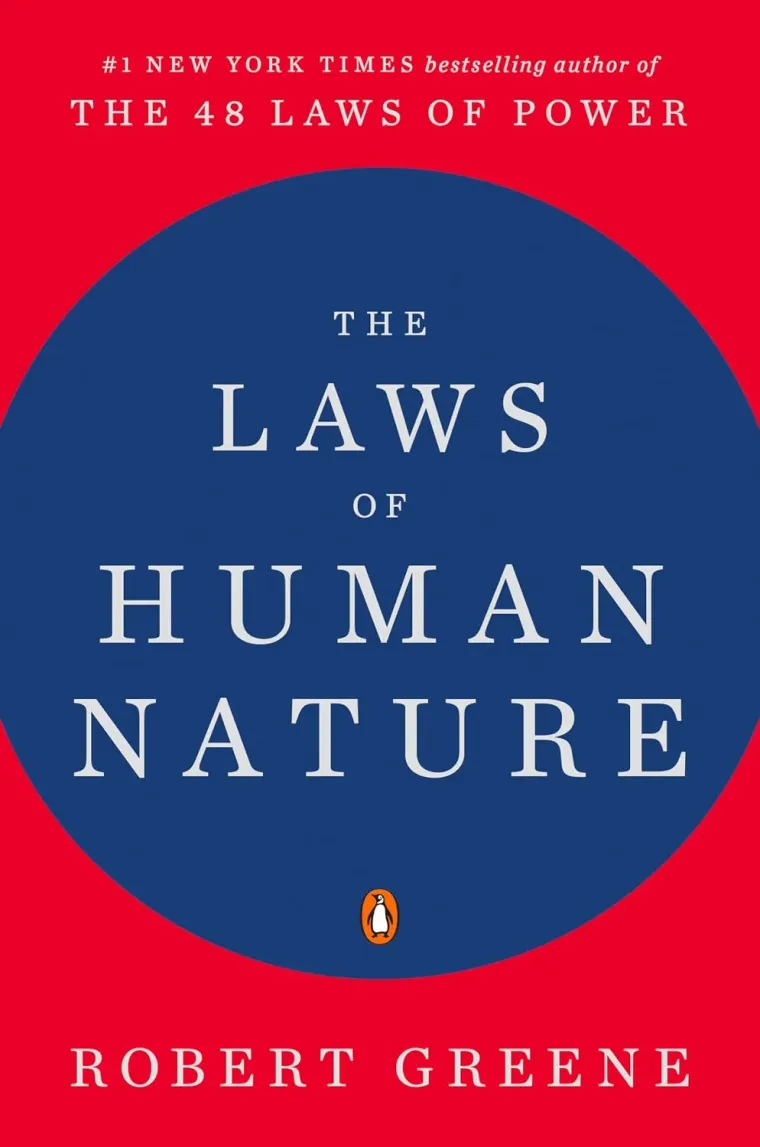
The Laws of Human Nature
Before you read
Genre Self-Help, Non-Fiction
Pace Slow
Mood Reflective · Inspiring · Informative · Challenging
Content warnings (2) tap to show
- Violence
- War
My Score
My Review
The Laws of Human Nature is Robert Greene’s attempt to explain why people behave the way they do through eighteen different “laws” covering things like irrationality, narcissism, envy, defensiveness, aggression, conformity, self-sabotage, and our fear of death. Each chapter usually starts with a historical figure or real-life example before Greene breaks down the behaviour and then explains how recognizing it can help you understand both yourself and the people around you.
I found a lot of this genuinely interesting because it makes you stop and think about behaviours you normally notice in everyone except yourself. The historical stories keep it from feeling like one massive psychology lecture, although at over 600 pages there were definitely sections where I felt he was making the same point longer than necessary. I also wouldn’t treat every “law” as proven psychological science, because Greene blends psychology, philosophy, history, and his own interpretation pretty freely. But as a book about watching people more carefully and becoming more aware of your own emotional reactions, there’s a lot here that stuck with me.
The Goods
- Makes you examine your own behaviour as much as other people's
- The historical examples keep the ideas interesting
- Covers a huge range of human behaviour
- A lot of practical observations are easy to remember
- Good book to read slowly rather than rush through
The Bads
- It's much longer than it needs to be
- Some ideas get repeated several times
- Not every psychological claim feels equally well supported
- Greene can sound overly certain about people's motives
- Some chapters are much stronger than others
My Recommendation
This is a good fit if you like psychology, human behaviour, and books that make you pay closer attention to why people react the way they do. I liked that Greene doesn't just point at narcissists, manipulators, jealous people, or aggressive personalities and tell you how to deal with them—he keeps reminding you that the same tendencies exist in you too. It's definitely dense and I wouldn't take every idea as scientific fact, but if you enjoy books about understanding people, emotional control, influence, and becoming more self-aware, there's a lot worth pulling from this one.
Spoilers Tap to show: only if you’ve read it, or don’t mind knowing what happens
Greene’s main argument is that people aren't nearly as rational or self-aware as they think they are, and much of human behaviour is driven by unconscious emotions, insecurity, narcissism, envy, aggression, the need for approval, group pressure, and fear of mortality. Across eighteen laws, he argues that you can become better at dealing with people by controlling your immediate emotional reactions, developing empathy, watching behaviour instead of trusting appearances, noticing repeated character patterns, thinking long term, recognizing your own darker impulses, resisting group thinking, understanding aggression, finding a sense of purpose, and accepting that death is unavoidable. The bigger takeaway isn't really about manipulating everyone around you; it's that the more clearly you understand your own weaknesses and the predictable patterns in other people, the less likely you are to be controlled by either.
Find this book at these locations
To buy
- Amazon paperback or hardcover
- Bookshop.org from a local shop
To listen
- Audible free sample
E-books
- Kindle
- Google Play Books
- Libby free from your library
More reviews: Goodreads · The StoryGraph