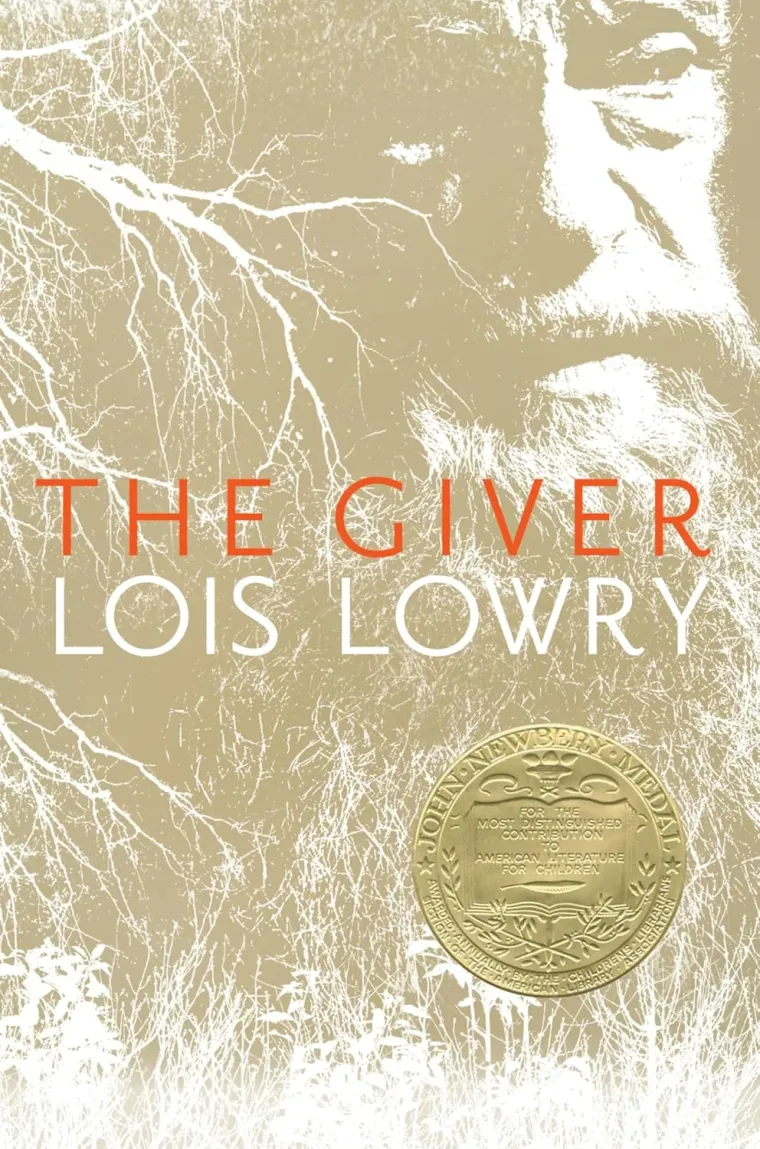
The Giver
Before you read
Genre Young Adult, Dystopian, Science Fiction
Spice 0/5
Gore 1/5
Pace Medium
Mood Dark · Emotional · Hopeful · Tense · Mysterious · Sad · Reflective · Challenging
Content warnings (3) tap to show
- Violence
- Child abuse
- War
My Score
My Review
The Giver follows twelve-year-old Jonas, who lives in a community where almost every part of life has been controlled to eliminate pain, conflict, and difficult choices. At first, his world seems safe and almost perfect, but when he's selected to become the new Receiver of Memory, he begins experiencing everything his society has deliberately erased—colour, love, music, pleasure, grief, violence, and death. The more memories the Giver passes to him, the harder it becomes for Jonas to accept the life everyone around him considers completely normal.
I was surprised by how much this manages to do without being a very long book. The world starts off feeling almost harmless, and then little things keep becoming more unsettling until you realize how disturbing the whole system actually is. I especially liked how Jonas's understanding changes gradually instead of having one huge moment where everything suddenly makes sense. There are some genuinely dark scenes for a book aimed at younger readers, but they actually serve the bigger questions about freedom, choice, memory, and whether removing pain is worth giving up everything that makes life meaningful.
The Goods
- The dystopian world is simple but really effective
- Jonas changes naturally as he learns the truth
- The darker reveals hit surprisingly hard
- Raises a lot of questions without overexplaining them
- The writing is incredibly clean and easy to read
The Bads
- Some of the world-building is intentionally vague
- The community can feel almost too simplified
- Supporting characters aren't deeply developed
- The ending is very ambiguous
- I wanted a little more after Jonas finally leaves
My Recommendation
This is a great fit if you like dystopian books that are more interested in ideas than nonstop action. What worked for me was how normal Jonas's community seems at first and how slowly you start noticing everything that's missing from their lives. It's short and easy to read, but there are some surprisingly heavy ideas underneath it about freedom, conformity, grief, love, and the value of painful memories. Even years after it was written, I can understand why this is one of those books people keep discussing.
Spoilers Tap to show: only if you’ve read it, or don’t mind knowing what happens
Jonas is chosen to become the community's next Receiver of Memory and begins training with the Giver, who transfers memories of everything their society eliminated when it created Sameness, including love, colour, music, pain, war, and death. Jonas eventually discovers that being “released” doesn't mean being sent somewhere else—it means being killed, something he learns by watching a recording of his own father calmly euthanizing one of two identical newborn twins. He also learns that the Giver's previous trainee, Rosemary, couldn't cope with the memories and asked to be released, causing the memories she'd received to return to the community after her death. Jonas and the Giver plan for Jonas to escape so his memories will similarly return and force everyone to experience real emotion again, but Jonas leaves earlier than planned when he discovers that baby Gabriel is scheduled to be killed. He takes Gabriel and escapes by bicycle, eventually reaching a snowy landscape where both are starving and freezing. Jonas finds a sled, rides toward lights and music coming from a house below, and believes he's finally reaching Elsewhere. The book ends without explicitly confirming whether Jonas and Gabriel have actually found safety or whether Jonas is experiencing a final memory as they die.
Find this book at these locations
To buy
- Amazon paperback or hardcover
- Bookshop.org from a local shop
To listen
- Audible free sample
E-books
- Kindle
- Google Play Books
- Libby free from your library
More reviews: Goodreads · The StoryGraph