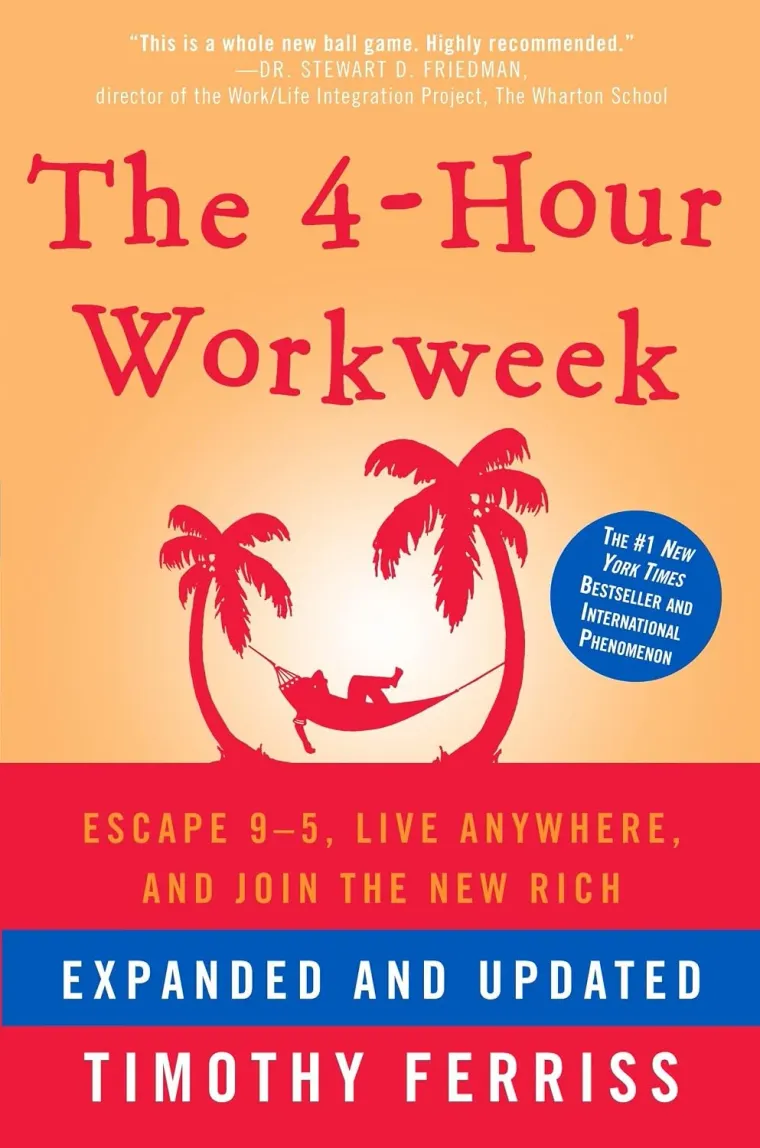
The 4-Hour Workweek
Before you read
Pace Medium
Mood Reflective · Inspiring · Informative · Challenging
My Score
My Review
The 4-Hour Workweek is basically Timothy Ferriss questioning the whole idea that we’re supposed to spend most of our lives working and then finally enjoy ourselves when we retire. He focuses on cutting out pointless work, automating or outsourcing what you can, building income that doesn’t need constant attention, and giving yourself more control over where and when you work.
I liked how willing the book was to challenge things we normally just accept about work and productivity. Some of the advice definitely feels dated now, especially around outsourcing and certain online-business ideas, and a few examples sound a little too perfect. But there were still plenty of moments where I stopped and thought about how much time gets wasted just looking busy instead of actually doing something useful.
The Goods
- Makes you rethink the normal workweek
- Strong ideas around eliminating pointless work
- Very practical in places
- Easy, conversational writing
- A lot of the productivity advice still holds up
The Bads
- Some examples feel dated now
- A few ideas sound easier than they really are
- The outsourcing advice won’t fit everyone
- Can feel overly confident in places
- Some sections repeat the same basic message
My Recommendation
This is a good fit if you’re interested in productivity, online business, entrepreneurship, or just finding ways to stop letting work take over your entire life. I liked the bigger idea more than some of the specific tactics: figure out what actually matters, get rid of the rest, and stop treating being busy like it automatically means you’re productive. If you read it as a collection of ideas to test rather than a literal blueprint for working four hours a week, there’s still a lot here that’s useful.
Spoilers Tap to show: only if you’ve read it, or don’t mind knowing what happens
The whole book comes down to Ferriss’s DEAL system: Define what you actually want from your life, Eliminate work and information that don’t matter, Automate as much income and routine work as possible, and Liberate yourself from being tied to one place or a normal 9-to-5 schedule. He argues that the goal isn’t literally to work only four hours every week, but to stop trading all of your time for money and waiting until retirement to enjoy your life. He pushes things like the 80/20 rule, shorter deadlines, remote work, outsourcing, automated businesses, and taking “mini-retirements” throughout life instead of saving everything for later. My biggest takeaway was that some of the specific tactics have aged, but the main idea still works: being busy and being productive aren’t the same thing, and having more control over your time can matter more than simply earning more money.
Find this book at these locations
To buy
- Amazon paperback or hardcover
- Bookshop.org from a local shop
To listen
- Audible free sample
E-books
- Kindle
- Google Play Books
- Libby free from your library
More reviews: Goodreads · The StoryGraph